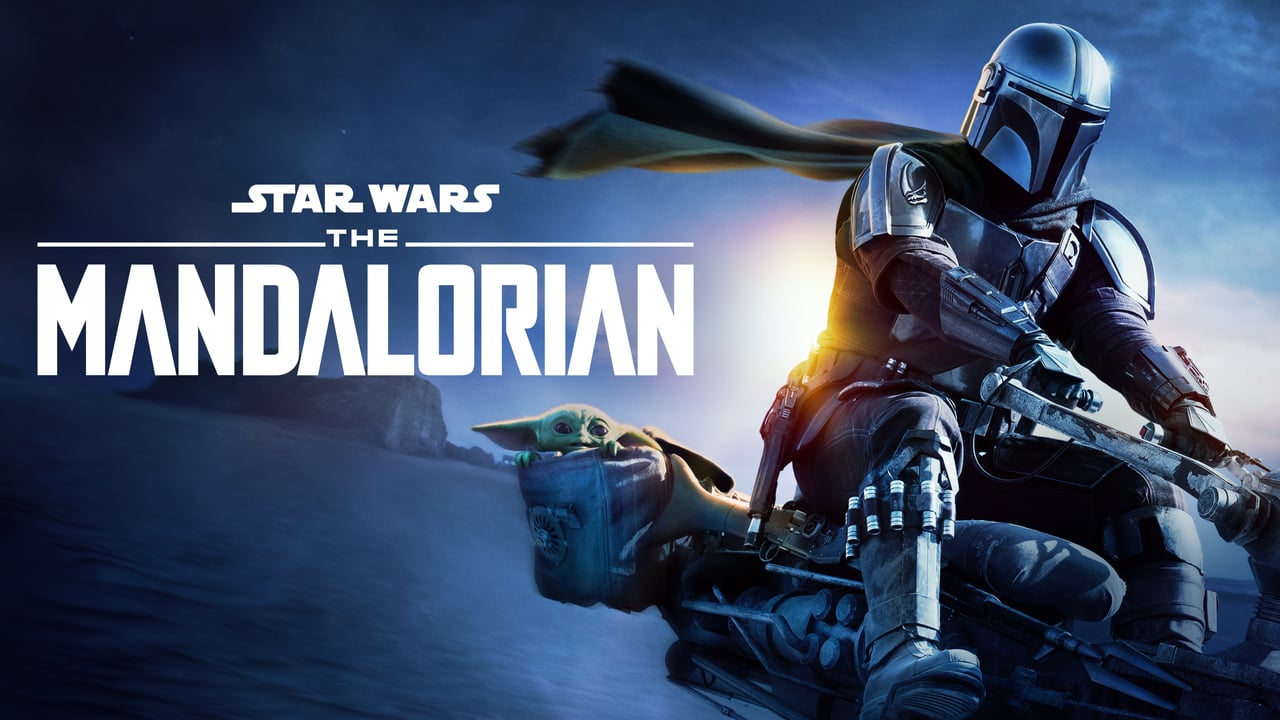
After establishing a new standard for Star Wars, The Mandalorian builds upon what was established in the previous season, as it further integrates itself in the Star Wars canon. More memorable characters are added to the mix while the main cast continues to venture into new territory. This season increases the action and character development for a larger impact despite the basic storytelling.
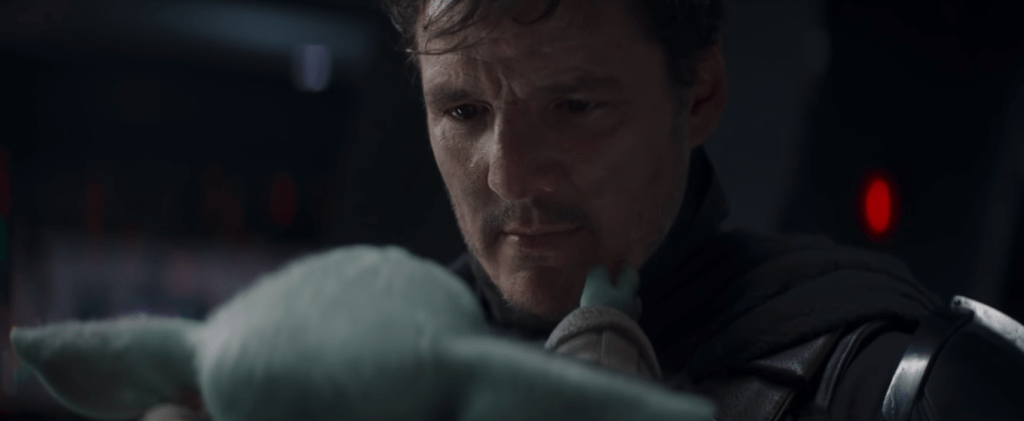
Unmasked Mando and Grogu in “The Rescue” CREDIT: Lucasfilm/Disney+
The titular character has definitely shown major progress throughout the season, and it’s interesting to see his viewpoints challenged, especially with Mando discovering the variety in Mandalorian culture based on each respective faction. His father-son relationship with Grogu (a.k.a. The Child/Baby Yoda) continues to develop for the better and showcases how much Mando is willing to go through just to keep him safe, as it creates some of the most emotional moments of the series. I also applaud Pedro Pascal for being able to create emotion and engagement under the helmet and still being amazing for the couple of instances where his face is seen.
Grogu, after taking the world by storm, continues his dominance of cuteness as he learns more about his force abilities. Cara Dune continues to be an action-heavy heroine who is still trying to overcome the emotions of her past. Greef Karga is still memorable despite having a reduce role for this season, while Moff Gideon became a lot more menacing and cunning as he’s shown to be a character that loves being evil. Other characters such as the unnamed Mythrol, Fennec Shand, Mayfeld are welcomed returns with more time to shine during individual episodes.
One of the best aspects of this season is the return of previous Star Wars characters, with some of them making their live-action debuts. In the case of Bo Katan and Ahsoka Tano, both of them have changed to some extent since they were last seen in Star Wars Rebels, and it makes The Mandalorian feel a lot more significant to the larger Star Wars experience. Boba Fett’s comeback redeems his character after his disappointing defeat in Return of the Jedi, with his appearances in the show finally living up to his legendary status. For fans of these legacy characters such as myself, the fanboy levels of excitement are through the roof, as there’s a sense of excitement and reward that comes from having in-depth knowledge of the current Star Wars canon. The returns of these characters will seemingly lead to more legacy characters while filling in the gap between the original and sequel trilogies.
The action and production values continue to be impressive (even with the blunder of the “Jeans Guy” that has since been removed), as it creates an immersive experience like no other through the innovative StageCraft technology. For a live-action Star Wars production, the action feels intimate and fast-paced, while being among the most grounded battles for the franchise. The show-off between Mando and Moff Gideon in the season finale was emotionally impressive with amazing choreography while Ahsoka’s battle with the Magistrate is simple but captivating. The planets in this season feel so diverse while also sharing some similarities to other planets in the Star Wars universe, while Tatooine continues being a planet with plenty of sand and danger.
Despite storylines and episodes that vary in significance and scope, all episodes had enough emotion, complexity, and heart to be worthwhile (though some episodes are better than others). As the series progresses, there’s more integration of certain elements from the non-canon slate of media known as “Star Wars Legends”, as they make their way into the current canon. Episodes such as “The Siege” and “The Marshal” had plenty of fun action while episodes such as “The Jedi”, “The Tragedy”, and “The Rescue” were ambitious and executed impressively with emotional and exciting moments.
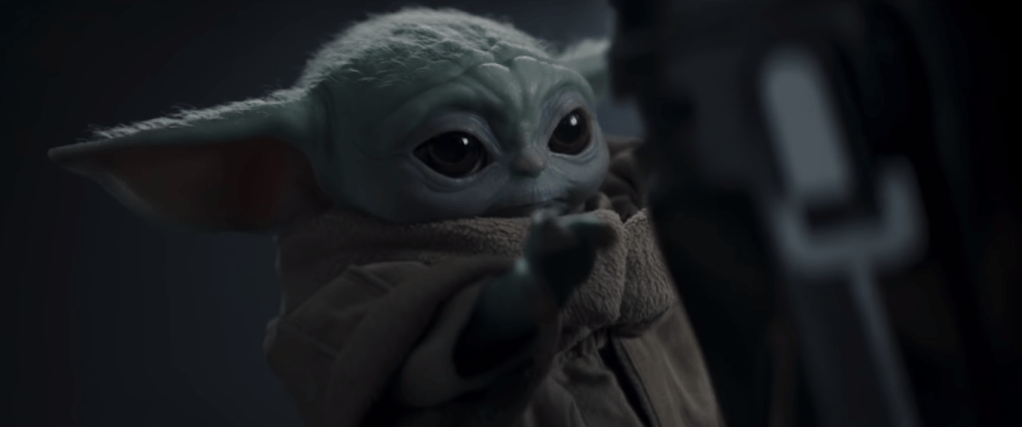
Grogu and Mando in “The Rescue” CREDIT: Lucasfilm/Disney+
The two major plot threads unfolded in a good way, while also leaving room to build upon Mandalorian culture and the status of the Jedi post-Order 66. Mando interacting with other Mandalorians outside his faction continues to flesh out the diversity in Mandalorian culture and opens the door for even more Mandalorians (old and new) to show up in the future. Meanwhile, Grogu discovering his force abilities was done in a fun manner while creating importance for his future and how best to use his gift.
Overall, this season managed to top its predecessor, despite the high bar that was set for the first season. Mando and Grogu’s relationship has never been stronger, as their father-son dynamic makes for some emotional moments. Meanwhile, the return of characters such as Bo Katan and Ahsoka Tano work well in establishing the importance of the series in the Star Wars canon. The action continues to be thrilling even with the relatively simple storytelling. With new live-action Star Wars shows on the horizon, hopefully they’ll be able to replicate the quality established by this series so far.
EPISODE RANKINGS FOR SEASON 2 (FROM WORST TO BEST)
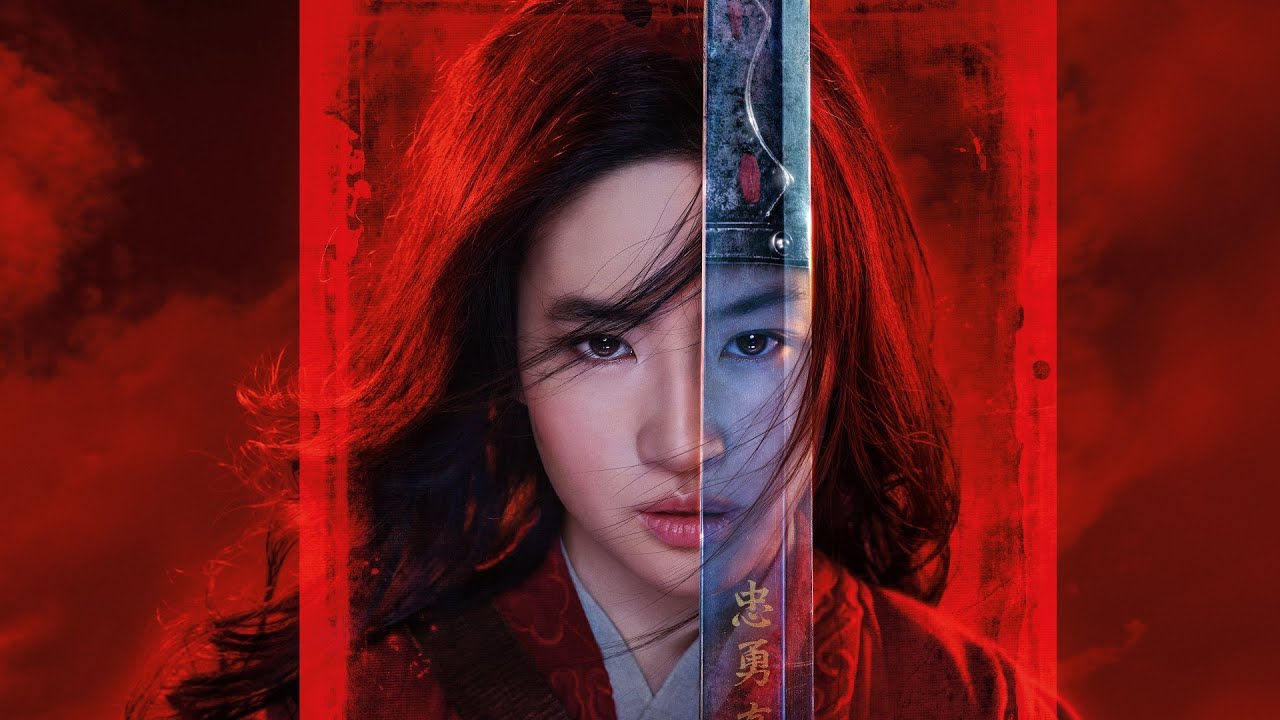
Out of all the Disney live-action remakes that have been released so far, this one was my most anticipated based on the trailers. However, that hype started to diminish when controversies began to arise, and was gone by the time I finished watching the film. A remake that had potential to improve on the original turned out to be a film that lacked memorable characters and storytelling without much depth.
All of the characters are forgettable, even if most of the blame is placed on the bad directing and writing. Mulan herself is particularly bland with no genuine character development, as Yifei Liu showcases little to no emotion in her performance. The closest effort of emotional impact is the relationship between her and fellow soldier Chen Honghui, which has some development but lacks emotional weight. The other actors try their best but are given nothing to work with and end up as wasted potential, especially with the amount of effort that went into casting famous Chinese actors. Characters such as Mulan’s sister and Xianniang (the evil witch) are pointless, with the latter having little time to shine and doing a plot twist that makes no sense. While the original “Mulan” had a problem with its villain (Shan Yu) being forgettable outside of his design and offscreen exploits, the remake’s villain (Böri Khan) is no better.
The mystical elements of the film also feel pointless, and don’t mesh in well with the universe of the film. The use of “chi” is similar to the Force in the Star Wars universe, however the film doesn’t make it developed enough to be interesting nor mysterious enough to create a sense of curiosity. Despite some level of explanation, the Phoenix is pointless and doesn’t serve much of a purpose outside of pseudo-motivation for Mulan at certain points. And it really feels pointless with the “loyal, brave, true” philosophy also established and serving more of a purpose in Mulan’s need to embrace her chi in order to become a formidable warrior.
For a story that is meant to showcase female empowerment through women being as capable as men, it doesn’t place enough emphasis on the conflict of women being subjected to societal roles. And with the added emphasis of loyalty to the Emperor and the normality of arranged marriages after what Mulan accomplished goes against any attempts at breaking gender norms. The attempts at recreating certain key moments from the original are done poorly and lessens the impact of Mulan’s devotion to her family and the gruesome reality of war. The lack of emotion and a heavy reliance on dialogue hampers the concept of “dishonor” as all acts of this nature in the film don’t have a lasting impact.
One positive aspect, and being the best example out of all the remakes, is the visuals and the use of colors. While the other remakes sacrificed the rich colors of classic animated Disney films for “realism”, this film finds a way to create a sense of realism while having a variety of colors to create a visual experience. The fighting scenes were serviceable with nice choreography along with inspiration from wuxia films, but I expected more of them due to the PG-13 rating. However, there are certain instances that felt over-the-top (in a hilariously bad way) and out of place, particularly with Mulan’s incident with the matchmaker and the climax. There are also a couple of scenes that are genuinely good such as Mulan’s conversation with her father about the concept of “loyal, brave, true” and Mulan’s soldier comrades backing her up as she convinces them of Böri Khan’s survival and plan to take out the Emperor.
Overall, this remake with potential was botched with bland and pointless characters, despite making more of an effort in the visuals for an experience that isn’t entirely boring. The mystic elements feel tacked on without purpose and hurts even more when taking into account all of the controversies it faced. While not the worst Disney remake, it’s not worth watching on its own merits.
Movies can and do have tremendous influence in shaping young lives in the realm of entertainment towards the ideals and objectives of normal adulthood.
-Walt Disney
Walt Disney Animation Studios has been producing feature-length animated films for over 80 years, with no signs of slowing down. Like any other studio, their history has been filled with ups and downs, partially defined by certain corporate decisions and current events of the time period. Despite the variety in settings and genres, each film has served a purpose of entertaining people of all ages and the need to craft timeless stories. While the ranking of individual films are common, I seek to do something unique with the ranking of the eras from the studio. Each era has a distinct “feel” and certain similarities, even if certain films may be more different than others. The seven eras that make up the history of the studio (Golden Age, Wartime Era, Silver Age, Dark Age, Disney Renaissance, Post-Renaissance, Revival Era) are unique and have their own significance in animation history and serving as the trend-setters for the animation landscape.
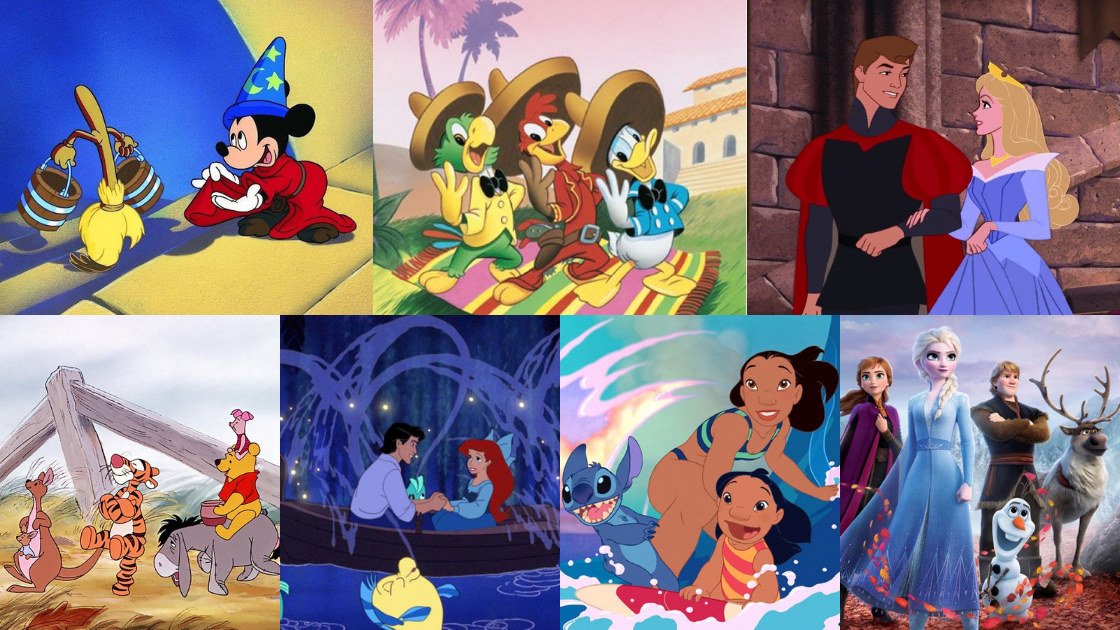
L to R: Fantasia 2000 / Atlantis: the Lost Empire / Home on the Range / Bolt CREDIT: Disney
#7 – POST-RENAISSANCE (2000 – 2008)
Fantasia 2000 (2000)
Dinosaur (2000)
The Emperor’s New Groove (2000)
Atlantis: the Lost Empire (2001)
Lilo & Stitch (2002)
Treasure Planet (2002)
Brother Bear (2003)
Home on the Range (2004)
Chicken Little (2005)
Meet the Robinsons (2007)
Bolt (2008)
The worst era in Disney Animation history, the Post-Renaissance era saw a decline in quality and financial success, particularly in comparison to the Disney Renaissance era. Two of the films from the era (Brother Bear and Chicken Little) are considered the worst-rated films of the studio based on their 30% range critic scores on Rotten Tomatoes. While the company as a whole wasn’t as financially vulnerable, there was definite turmoil from the executive side of Disney with the ousting of former CEO Michael Eisner and the purchase of Pixar leading to a change in leadership for the studio. One admirable aspect of this era is the experimentation of stories that went against the formula established in the previous era, even if they weren’t executed well. Films such as Atlantis and Treasure Planet sought to tell more mature stories and avoiding musical numbers, while Lilo & Stitch evolved into a major Disney franchise. Another significant change that occurred during this era is the “temporary” abandonment of 2D animation in favor of CGI due to poor box office returns. There are a few bright spots that stand out such as Fantasia 2000, The Emperor’s New Groove (a film that has since established a cult following), and Home on the Range (a film that I love but everyone else hates).
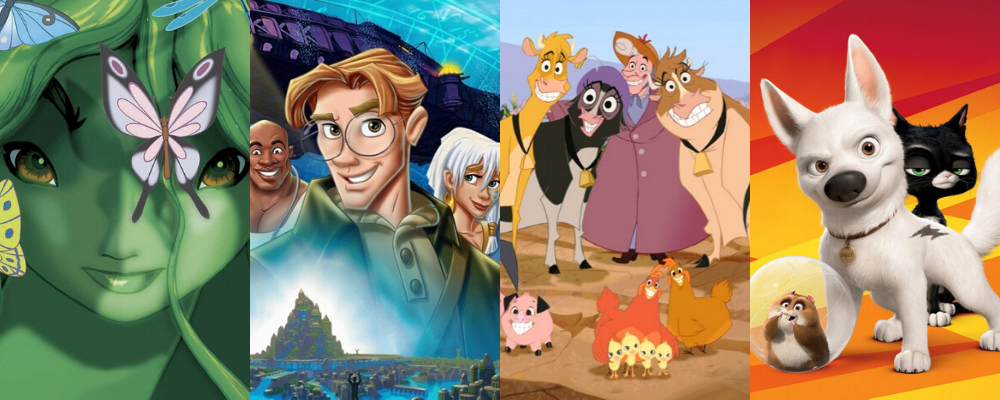
L to R: Robin Hood /The Many Adventure of Winnie the Pooh / The Black Cauldron / Oliver & Company CREDIT: Disney
#6 – DARK AGE (1970 – 1988)
The Aristocats (1970)
Robin Hood (1973)
The Many Adventures of Winnie the Pooh (1977)
The Rescuers (1977)
The Fox and the Hound (1981)
The Black Cauldron (1985)
The Great Mouse Detective (1986)
Oliver & Company (1988)
The Dark Age for the studio was somewhat bright in comparison to other areas of the company at the time, as most of the films released had some level of financial success. However, the death of Walt Disney and the stagnation of innovation made most of these films lack the same magic from the previous eras. Most of these films are entertaining in their own right, but lack some memorability in certain significant areas such as characters and musical numbers. Films like The Aristocats and The Rescuers suffered from bland and boring storytelling while The Black Cauldron was an experimental disaster in the studio’s attempt to break the stereotype of Disney films being only for kids. The change in leadership of the company, mixed in with financial woes, a potential corporate takeover, and the transition period from old to new animators all had an impact on the studio and their output. Fortunately, the financial success of The Great Mouse Detective and Oliver & Company (along with the success of Who Framed Roger Rabbit) would serve as the groundwork for the success of the Disney Renaissance. Even among these average-to-good films are a couple of classics such as Robin Hood (despite the decline in critical praise since its release) and The Many Adventures of Winnie the Pooh.
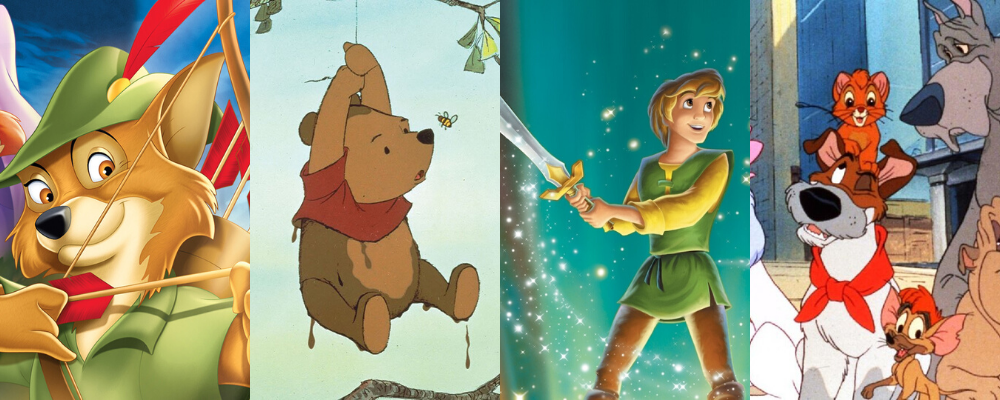
L to R: Cinderella / Lady and the Tramp / The Sword in the Stone / The Jungle Book CREDIT: Disney
#5 – SILVER AGE (1950 – 1967)
Cinderella (1950)
Alice in Wonderland (1951)
Peter Pan (1953)
Lady and the Tramp (1955)
Sleeping Beauty (1959)
101 Dalmatians (1961)
The Sword in the Stone (1963)
The Jungle Book (1967)
The Silver Age served as the first return to form for the studio, led by the massive success of Cinderella. With Cinderella and Sleeping Beauty, Walt Disney aimed to replicate his initial success of Snow White and establish the princess formula while the other films continued his success of adaptations. This era also served as a transitional period as Walt Disney became less hands-on with these films as he turned his attention to live-action films, TV shows, and Disneyland. All of these films can be considered classics on their own merits though some films are better than others, with Walt Disney having more involvement on certain films over others. 101 Dalmatians marked a new innovation in animation with the xerox technology, as it was used to speed up the animation process and helped create the dots for all the dalmatians in the film. Another innovation implemented during this era is the use of widescreen, with Lady and the Tramp and Sleeping Beauty utilizing wider aspect ratios that have since become common in recent years. While these films don’t push the boundaries of the Golden Age, they established a standard of storytelling that would become normal for the studio. The personal favorites of the era are Lady and the Tramp and The Sword in the Stone.
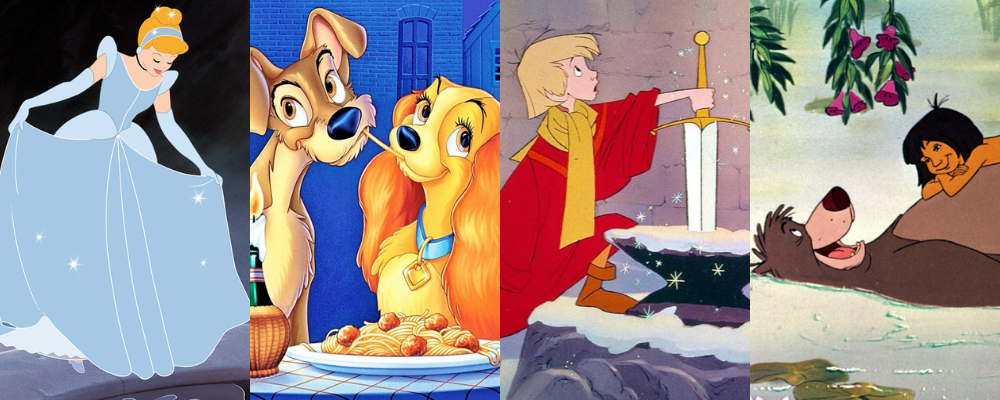
L to R: The Little Mermaid /The Lion King / The Hunchback of Notre Dame / Mulan CREDIT: Disney
#4 – DISNEY RENAISSANCE (1989 – 1999)
The Little Mermaid (1989)
The Rescuers Down Under (1990)
Beauty and the Beast (1991)
Aladdin (1992)
The Lion King (1994)
Pocahontas (1995)
The Hunchback of Notre Dame (1996)
Hercules (1997)
Mulan (1998)
Tarzan (1999)
Disney Animation returned to their roots once again with a string of films that mostly had critical and financial success, and increased the use of CGI elements using the CAPS system from Pixar. Outside of The Rescuers Down Under, all of the films were large-scale musicals with protagonists searching for a sense of belonging in addition to all those films receiving an Oscar nomination for Best Original Song and/or Best Original Score. While all of these films are good, their homogeneous traits does hamper the impact of the era, even if some of these films are considered to be the best of animation. Aladdin, Pocahontas, and Mulan started the initial push for diverse representation, even if they attracted criticism for their execution. The Hunchback of Notre Dame pushed the most boundaries in the era with more mature themes and an overall dark tone not normally associated with Disney, leading to the most underrated film in the canon and the best of the era despite the tone problem. All the princess films served as a middle ground between classic and modern princesses, with heroines that were proactive despite ending up with a man in the end. The Disney Renaissance is the most popular and documented era, and has a level of significance that elevates the status of each film.
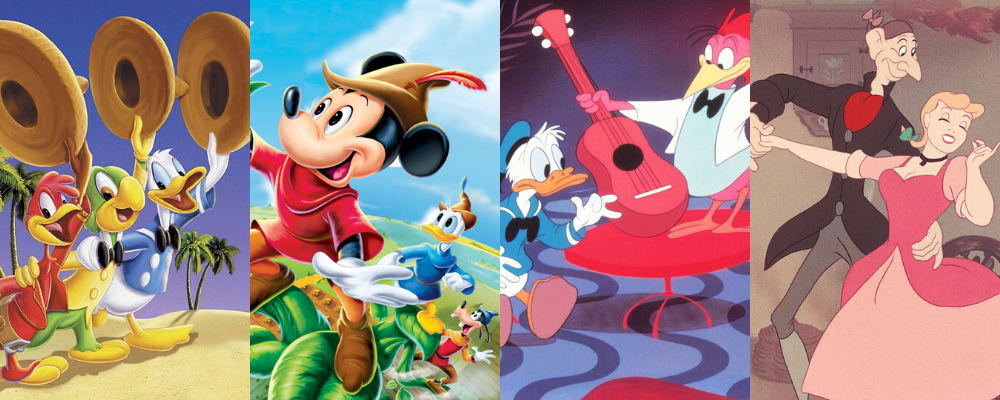
L to R: The Three Caballeros / Fun and Fancy Free / Melody Time / The Adventures of Ichabod and Mr. Toad CREDIT: Disney
#3 – WARTIME ERA (1942 – 1949)
Saludos Amigos (1942)
The Three Caballeros (1944)
Make Mine Music (1946)
Fun and Fancy Free (1947)
Melody Time (1948)
The Adventures of Ichabod and Mr. Toad (1949)
Out of all the eras of Disney Animation, this era is the most underrated despite the limits that came from World War II. Saludos Amigos and The Three Caballeros are significant in US relations history as they strengthened the relationship between the US and Latin America during World War II as part of the Good Neighbor Policy. In addition, The Three Caballeros had an innovative filming technique that enhanced the blend of live-action and animated characters. The rest of the films served as means of financial stability after World War II weakened the studio. Make Mine Music and Melody Time served as the spiritual sequels to Fantasia, as the two followed a similar concept of combining a variety of short stories and setting animation to music (though reversed in some cases). The concept of these package films is a double-edged word, as they combine different stories under a loose theme in a cohesive manner but get mixed in with weaker segments and feels different from the linear narratives of other Disney films (though The Three Caballeros is the most linear as it was intended to have a linear story from the start of production). All of these films are worth watching at least once, with a good chance that viewers will find specific segments (and even entire films) that are on-par with linear Disney storytelling.
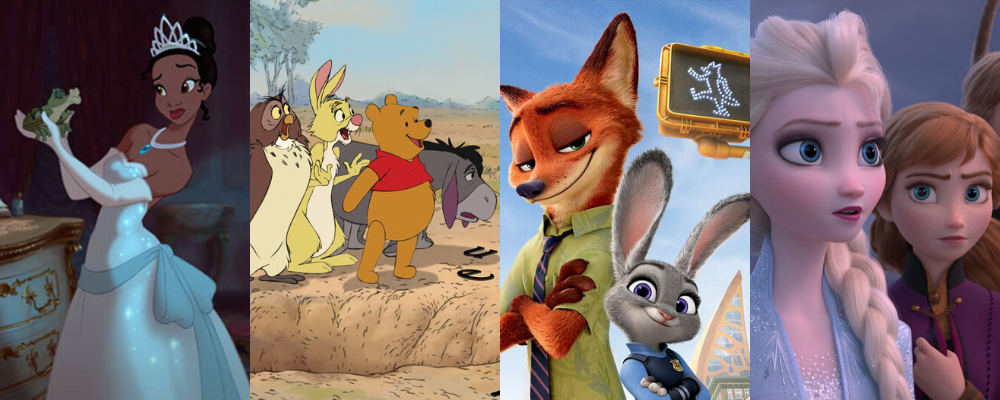
L to R: The Princess and the Frog / Winnie the Pooh / Zootopia / Frozen II CREDIT: Disney
#2 – REVIVAL ERA (2009 – PRESENT)
The Princess and the Frog (2009)
Tangled (2010)
Winnie the Pooh (2011)
Wreck-It Ralph (2012)
Frozen (2013)
Big Hero 6 (2014)
Zootopia (2016)
Moana (2016)
Ralph Breaks the Internet (2018)
Frozen II (2019)
The most recent era in Disney Animation history, the Revival Era marked another return to form for the studio while also tackling stories that went against the mold of the Disney Renaissance. Outside of Winnie the Pooh, the films from this era can be classified into one of two categories: the progressive princess film that serves as meta commentary of their past or the unconventional non-musical set in a modern world. This era also marked the unofficial “death” of 2D Disney animation due to the lackluster performance of The Princess and the Frog and Winnie the Pooh (the last 2D Disney films), while their CG films make plenty of money. A notable trend inherited from Pixar is the concept of twist villains, as films such as Wreck-It Ralph, Frozen, and Zootopia used them to varying degrees of success. The dominance of Disney Animation was established once again with the financial success of Frozen and its sequel, ranking among the highest-grossing films of all-time. All the princess films from the era provided more empowering heroines reflective of modern women and Zootopia stands out with its message of racism that preserves the complexity in a more simplified manner. Based on the critical praise of all these films, they will become future classics and continue the Disney Animation legacy.
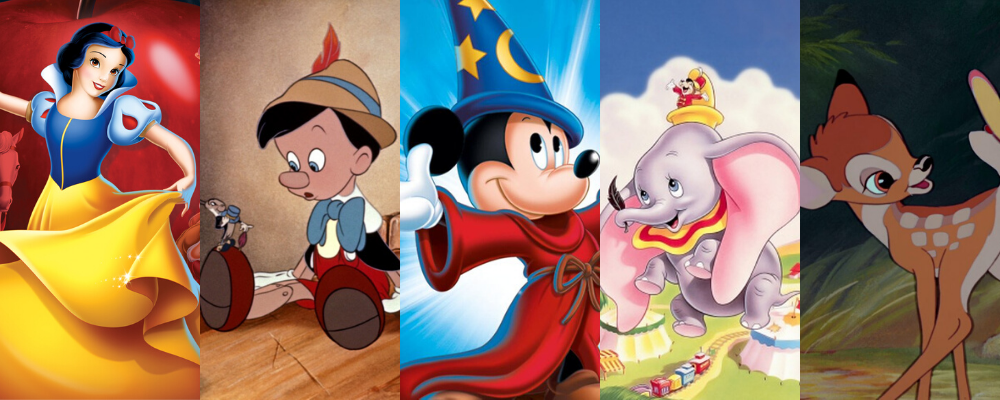
L to R: Snow White and the Seven Dwarfs / Pinocchio / Fantasia / Dumbo / Bambi CREDIT: Disney
#1 – GOLDEN AGE (1937 – 1942)
Snow White and the Seven Dwarfs (1937)
Pinocchio (1940)
Fantasia (1940)
Dumbo (1941)
Bambi (1942)
The best era of the studio happens to be their first, with all of them holding up many years later in terms of animation and storytelling. In addition, this era sought to create distinct storytelling with the variety in protagonists, settings, and source material. As the pioneer of feature-length North American animation, Walt Disney made sure to innovate to some extent with detailed animation and simplistic storytelling that evokes emotion. Each film in this era had a certain element of darkness that are sure to startle viewers, whether it was the boys turning into donkeys in Pinocchio, the “Night on Bald Mountain” segment of Fantasia, or the death of Bambi’s mother in Bambi. All of these films have held the test of time, even if Snow White and Dumbo were the only ones that were financially successful on release, and the rest only became successful with reissues and additional praise over the years. Fantasia is a unique piece of art that raised the bar of the concept of setting animation to music, while Bambi emulated aspects of realism with animation, and the other three created fantastical worlds that immersed the viewer. Outside of quality, all these films are the most significant stepping stones in animation history and one of the most significant milestones in the history of Hollywood and film.
Everyone has their own way of ranking or grading the films and TV shows they watch, and here’s mine. This scoring system is how I analyze the quality of films and mostly follows these descriptions. Film and TV is subjective, so feel free to agree or disagree with my opinions from my reviews.
RATINGS (Out of 10)
0 – Should Not Exist
A film/show that is so terrible that it should have never been produced as it creates an extreme negative impact on the audiovisual art form.
Examples: TBD
1 – Garbage
A film/show that is extremely bad but warrants existing as an example of avoidance when creating a film or show, though it may have a “so bad, it’s good” quality.
Examples: TBD
2 – Awful
A film/show that is notably bad and difficult to sit through, with a few minor bright spots that doesn’t make it a complete waste of time.
Examples: TBD
3 – Terrible
A film/show that evokes a minor sense of hatred due to disappointment or frustration with the execution, but is salvageable with a unique/experimental element and/or high production value.
Examples: Dinosaur (2000); Cars 2 (2011)
4 – Bad
A film/show that has more bad elements than good (usually combined with boring scenes), leading to an overall hatred that is quickly forgotten.
Examples: The Rescuers (1977); Star Wars: The Phantom Menace (1999); Beauty and the Beast (2017)
5 – Mediocre
A middle-of-the-road film/show that has an equal amount of good and bad elements.
Examples: So Dear to My Heart (1948); Chicken Little (2005); The Good Dinosaur (2015)
6 – Decent
A satisfactory film/show that does the bare minimum of providing an entertaining experience and only worth watching once for completionist purposes.
Examples: Sleeping Beauty (1959); Cars (2006)
7 – Okay
A film/show that has a few major flaws but is counteracted with an element that makes it worth watching.
Examples: Make Mine Music (1946); Bedknobs and Broomsticks (1971); Avengers: Age of Ultron (2015)
8 – Good
A film/show that is genuinely entertaining with some minor and/or major flaws that keeps it from being more enjoyable and memorable.
Examples: Alice in Wonderland (1951); Toy Story (1995); Black Panther (2018)
9 – Amazing
A film/show that goes above and beyond despite a few minor flaws or one major flaw, with plenty of memorability.
Examples: Star Wars: The Empire Strikes Back (1980); The Little Mermaid (1989); Captain America: The Winter Soldier (2014)
10 – Masterpiece
A film/show that is one-of-a-kind with little to no flaws and has an aspect of timelessness, creating a worthy recommendation to anyone.
Examples: Fantasia (1940); Mary Poppins (1964); Avengers: Endgame (2019)

 Kenneth's Myriad of Media Blog