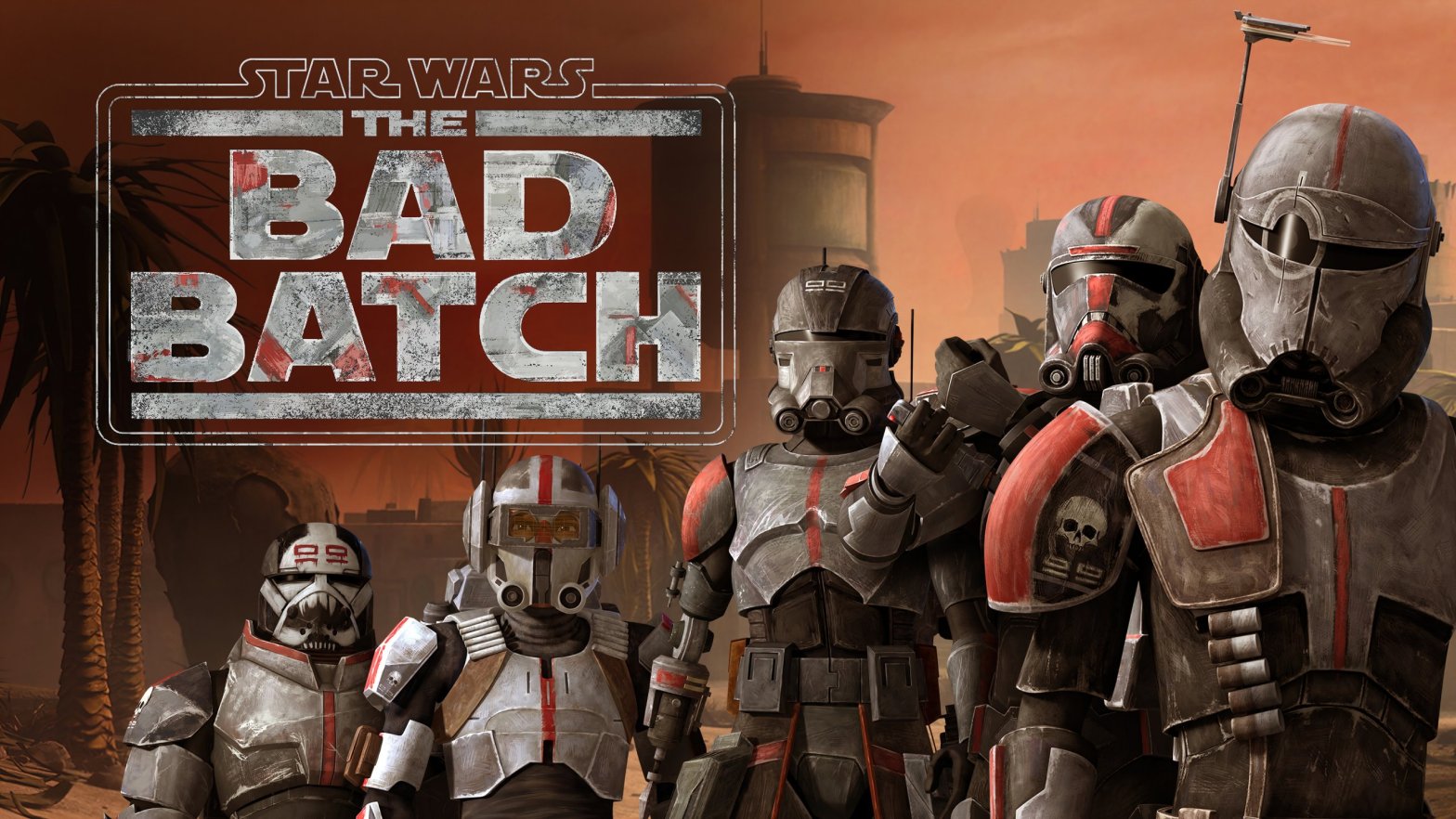
As the fourth full-length animated series in the Star Wars canon, expectations are becoming more intense. With the series being a spin-off of the highly-beloved The Clone Wars, those expectations are even higher. Fortunately, much of those expectations are met, even if there are areas that need improvement. In contrast to Star Wars Rebels, this series sees the initial rise of the Galactic Empire and its short-term impacts. Like the titular group (and its fellow animated Star Wars shows), the show is finding its footing in what it wants to accomplish.
Ever since their appearance in the seventh season of The Clone Wars, Clone Force 99 (a.k.a. the Bad Batch) has grown to become their own family unit as they navigate the galaxy after the end of the Clone Wars. However, some of the members of the group get more character development over others. Hunter works well as a father figure and possesses admirable leadership skills. Omega, the newest member of the group, works well due to her wide-eyed innocence and having her own set of strengths and weaknesses. She is a refreshing change of pace from the other child entry-point characters in previous Star Wars shows. Complimenting her as the big brother of the group is Wrecker, highlighted by his massive build and a kind heart. Omega and Wrecker’s chemistry is the strongest among the group, with their bond eliciting some of the most powerful emotional moments of the season. Serving as the odd man out is Crosshair, who works as a great foil to the rest of the group, though he could have been more impactful with more screen time. The members getting the short end of the stick in terms of development are Echo and Tech, with both being relegated to one-dimensional roles. Tech is unfortunately relegated to the genius stereotype, while Echo is the droid of the group in a figurative and literal sense. Each member compliments each other, though there’s more balance needed for them to be as memorable as the Ghost crew from Rebels.
Accompanying the titular characters is the variety of old and new characters that appear throughout the season. In terms of established characters, there’s plenty of familiar faces that show up as a means of expanding the Star Wars universe, including Captain Rex, Fennec Shand, and Hera Syndulla. These types of appearances are easily the highlights of their respective episodes, along with some fleshed-out details. There’s also a variety of new characters outside of Omega, with varying degrees of memorability. Characters such as Vice Admiral Rampart and clone trooper Howzer are easily memorable and feel in line with similar Star Wars characters, while characters like Cid lack memorability and a compelling personality.
Like other Star Wars shows, this series’ first season is clearly trying to find its footing similarly to the titular group. The overall flow of the season is clearly more episodic than usual, and the various mission-based episodes aren’t as great as those in The Mandalorian. The quality of the overarching narrative is a double-edged sword due to being contingent on the ambiguity of the fate of the Bad Batch. However, each episode is entertaining in its own right, with the more significant episodes being among the most memorable. Some of these notable episodes include “Battle Scars” and “Rescue on Ryloth,” as they deal with important issues such as the clones’ inhibitor chips and the short-term impacts of the Empire, respectively. One strength of the season is the dive into the start of the Empire and how it impacted the lives of civilians and showcasing the origins of stormtroopers. While the “resistance” from the Kaminoans was kind of a dud, the existential crisis among the Bad Batch is more than worth it. Having Crosshair and the rest of the group clash over their purpose after the Clone Wars is compelling, with their different perspectives adding some much-needed complexity to the Star Wars universe.
One consistent source of quality is the animation, as it carries over the same art style from The Clone Wars. The various worlds are depicted with plenty of detail, with their own climates and danger. The fluidity of the animation also lends to the intense and action-packed fight scenes. In a show like this, Dee Bradley Baker impressively manages to juggle between different voices and personalities among the members of the Bad Batch, with Michelle Ang having a nurturing and innocent voice for Omega. Like The Clone Wars and Rebels, Kevin Kiner’s score enhances the experience of the show and fits well with the visuals.
Overall, The Bad Batch and its titular characters are off to a great start despite some flaws. The members of Clone Force 99 work well together, though some get more development than others. Seeing the state of the galaxy at the start of the Empire’s reign is somewhat compelling, as well as the clones discovering their purpose post-war. The experience is also enhanced with the quality of animation and action previously seen in The Clone Wars. While the storytelling may feel more episodic, all the episodes serve some purpose in the timeline or character development. Hopefully, later seasons can rectify its issues and be among the other animated Star Wars shows in terms of quality.
SCORE: 8/10
 Kenneth's Myriad of Media Blog