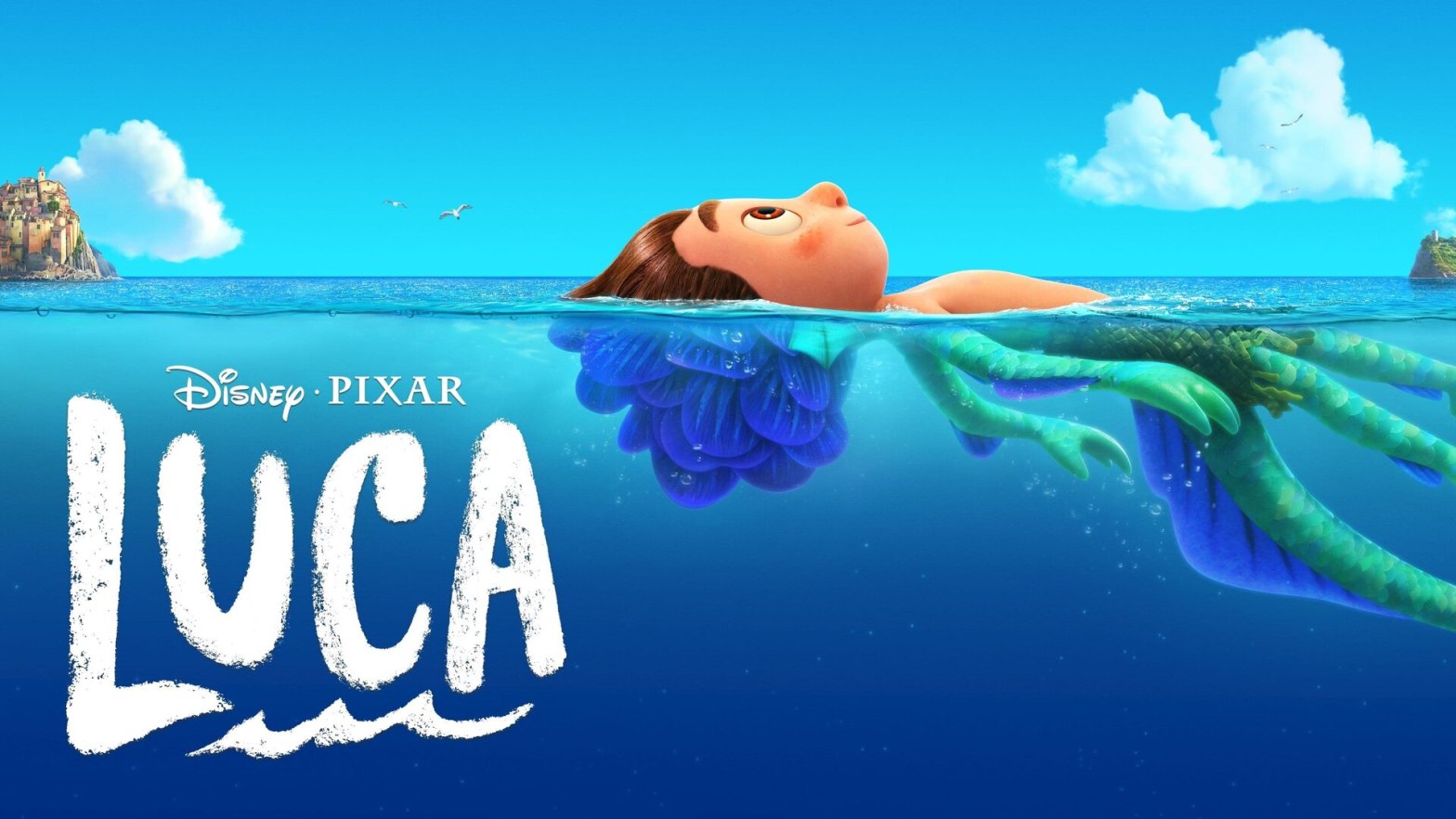
While Pixar is more known for their complex storytelling and characters, they can deliver simplistic storytelling. Not since A Bug’s Life has a Pixar film been simplistic in its storytelling and characters. Despite recent complex and emotionally heavy hits like Coco and Soul, this film takes a different direction with a simple story of childhood fun during the summer. However, even with its simplicity, the emotional stakes are on par with other Pixar films.
The most obvious example of simplicity in the film is the plot. In a similar vein to The Little Mermaid, the plot follows a desire for freedom and the joys of living in the human world. Setting it apart from Mermaid is the framing device of childhood fun during the summer, which is also reflected in the naivety of Luca and Alberto. Another notable departure for Pixar is the simplistic world-building. The only major world-building elements are the humans’ relationship to sea monsters (and vice versa) and sea creatures being able to transform into humans. With the focus on a small amount of world-building elements, it contributes to the pacing and overall simplicity of the film. Despite the simplicity of its structure, there are still a few unique surprises that make the film stand out on its own merits.
Even though the film is good overall, its characters are on the lower end of memorable by Pixar standards. The titular protagonist is a literal “fish-out-of-water” as he discovers the joys of human life. While simple in nature, Luca himself is still compelling due to the overall simplicity of the film. Alberto works as a mentor of sorts for Luca, with the duo having great chemistry and a strong friendship. Giulia also compliments the personalities of the two boys due to being an extroverted outcast. In a refreshing change of pace, this film has a grounded antagonist with Ercole, as he succeeds in being a fun but legitimate challenge against the protagonists. The rest of the characters are charming in their own right, with Machiavelli the cat being a standout character due to his humorous hostility. With the reliance on simplicity, the chemistry of the characters is what provides the emotional weight of the film. As a vessel of childhood fun, the film evokes a sense of nostalgia for adults from simpler times of “harmless” competition. Even with the inclusion of some predictable elements, the recreation of the joys of summer allows the emotional weight to resonate with viewers. The roles each character serves also help to enforce the message of respecting differences.
With the need to distinguish the worlds of the land and sea, both areas use their own set of colors. The oceanic world of the film utilizes plenty of bright greens and blues, while Portorosso is heavy on yellows and oranges. Another clever choice was the amount of brightness between both worlds. For comparison, the ocean world goes all out in brightness, while Portorosso manages to shine beautifully with its more muted color scheme. The character designs are visually creative and familiar, with the human designs being unique from your typical CG human characters; the designs of the sea monsters contain the usual features mixed in with unique facial features. Musically, this film follows in Ratatouille‘s footsteps with the incorporation of Italian-themed music and songs.
Overall, Luca succeeds with its simplicity, and it doesn’t feel the need to be among Pixar’s best films. This film has a laidback story that connects with our childhoods of summer fun and a visual style that creatively brings Italy to life. Despite the lack of depth in the characters and world-building, the emotional core is just about as solid as other Pixar films. While this film may be different from the usual Pixar fare, it succeeds as a welcome change of pace.
SCORE: 8/10
 Kenneth's Myriad of Media Blog